

Elsa Himmer MA
Assistant / PhD candidate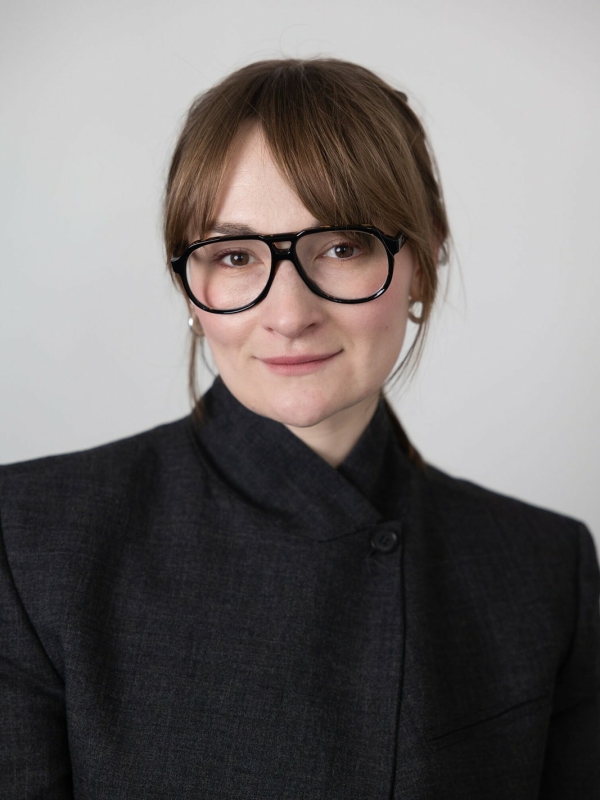
Assistant / PhD candidate
St. Alban-Graben 8
4051 Basel
Schweiz
Curriculum Vitae
Elsa Himmer studied Art History and Medieval Studies (BA) at the University of Hamburg, followed by Art History and Image Theory (MA) at the University of Basel. She completed her master’s degree with a thesis on everydayness and information in the work of the German artist Maria Eichhorn. Alongside her studies, she worked as a research assistant and curatorial assistant at the Migros Museum für Gegenwartskunst in Zurich before becoming a teaching assistant (BA Fine Arts) at the Zurich University of the Arts (ZHdK). She is a founding member of Perrrformat, a nomadic platform founded in Zurich in 2020, that is dedicated to the presentation and documentation of performative practices in (semi-)public spaces. Most recently, she was a research associate at Schaulager Basel, where she worked on the exhibition and publications related to Bass (2024) by the British artist Steve McQueen. Since February 2026, she is assistant to the Schaulager Professorship for Art Theory.
Aktuelles Projekt
Temporality, Modes of Address, and Resistance in the Œuvre of Steve McQueen (working title)
The dissertation analyzes how, across different phases of his work, narrative and cinematic strategies are developed in the video installations of the British director and filmmaker Steve McQueen, through which temporality, regimes of vision, and historical experience are reconfigured. At its core lies the question of the extent to which narration here functions as a practice that does not merely represent perception and knowledge but actively transforms them. While existing scholarship has primarily focused on questions of representing diasporic history and the present, the project shifts the emphasis toward a narratological analysis that foregrounds the modelling of affective temporal experience.
Quick Links