

Ort: Forum eikones, Rheinsprung 11, 4051 Basel
Filling the Blanks: Heinrich Seuse, Meister Eckhart, and the Nuns of St. Walburg
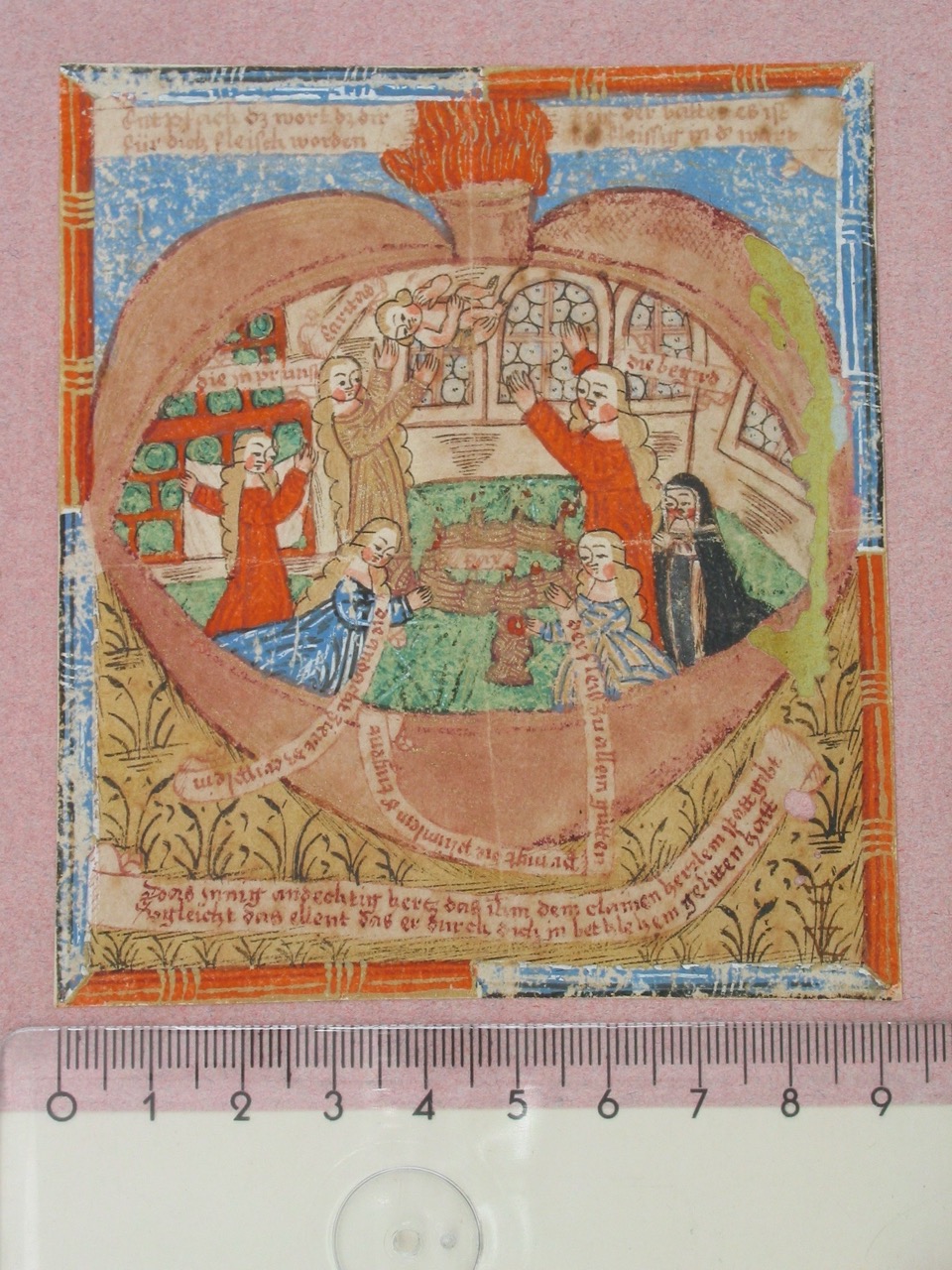
This lecture pairs two seemingly unrelated bodies of material—a Dominican friar's devotional treatise of around 1330 and a set of newly identified drawings by Benedictine nuns in Bavaria some 170 years later—to explore how late medieval religious writers and artists gave material form to an experience defined by its resistance to representation: mystical union with God. The first half examines Heinrich Seuse's Büchlein der ewigen Weisheit, showing how the friar structures his text around interwoven metaphors of writing and needlework, punning on the Latin textus to cast reading as a kind of embroidery performed on the "fleshly tables of the heart." Seuse repeatedly stages his own work as incomplete—a vision short ten meditations, a thread of three unequal strands, an embroidered image missing its background—so that readers, needle or pen in hand, are enlisted to finish what he left deliberately unfinished, becoming coauthors of a text designed to carry the aura of his living presence.
The second half turns to a remarkable, newly surfaced drawing from the convent of St. Walburg in Eichstätt, in which Christ's side wound opens onto a house-like interior populated by personified virtues attending an allegorical Nativity. Drawing on the convent's library, which bound Seuse's sermons together with those of Eckhart and Tauler, the lecture argues that this image gives startlingly literal pictorial form to Meister Eckhart's doctrine of the Gottesgeburt in der Seele—the birth of God in the soul—a teaching Eckhart himself insisted could be reached only by abandoning every image. The nun-artist's willingness to draw what Eckhart's own apophatic theology seemed to forbid representing offers a final, unexpected answer to Seuse's invitation to "fill in the blanks": where his readers were asked to complete a metaphorical textile, the St. Walburg nun completes it literally, translating text and doctrine alike into an image that dares to show what its theological source claimed could only be experienced in blindness.
Veranstaltung übernehmen als iCal
Quick Links